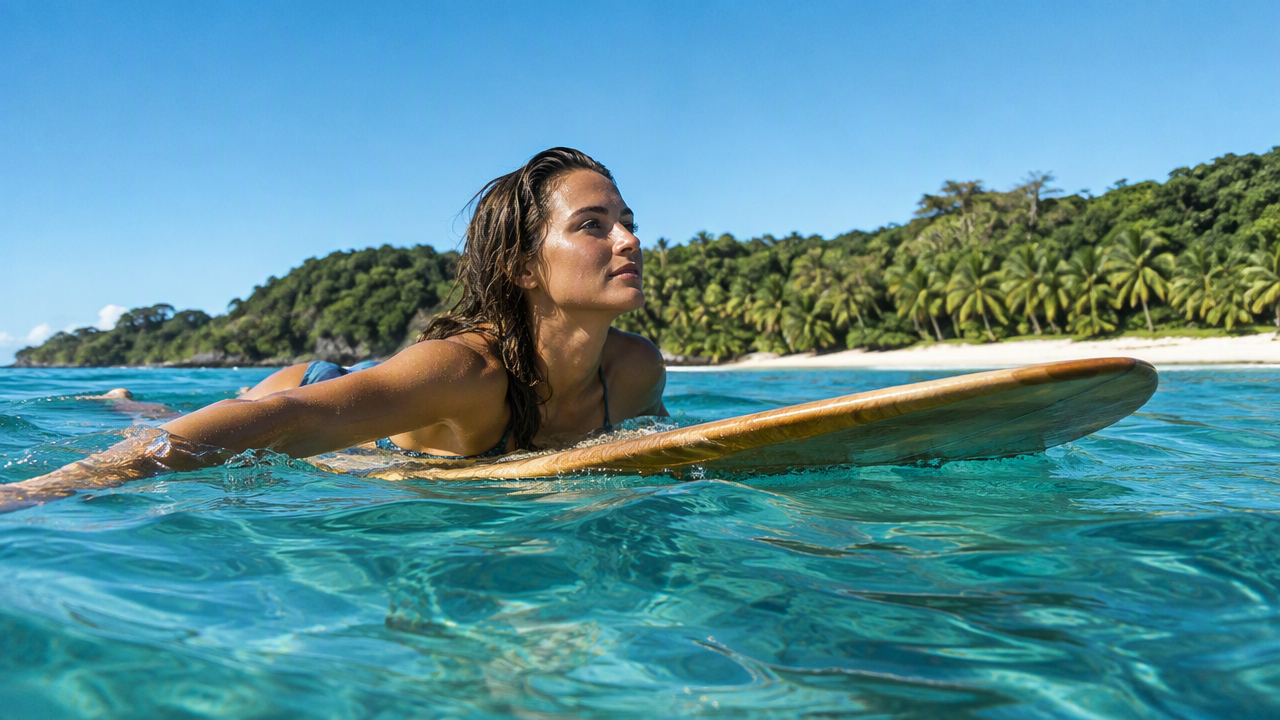
How to Paddle a Surfboard
How to paddle a surfboard efficiently: body position, arm stroke, balance and paddling out through whitewater, with tips for beginners.
Paddling is most of surfing. Good paddling means you catch more waves and get less tired.
Body Position
- Lie so the board's nose sits just above the water. Too far forward and it dives ("pearling"); too far back and it drags.
- Keep your legs together and on the board.
- Lift your chest slightly and look ahead.
The Stroke
- Reach forward with a slightly bent arm and pull deep beside the board, one arm at a time.
- Finish the stroke near your hip, then recover.
- Long, steady strokes beat fast, splashy ones.
Paddling Out
In gentle whitewater, beginners often walk the board out and turn around. When paddling out through small whitewater, push your chest up as the foam passes so it rolls under you. On bigger days experienced surfers use a duck dive or turtle roll — see the glossary.
Paddling for a Wave
Start paddling before the wave reaches you, then add two or three extra strong strokes as you feel it lift the board. Stopping too early is the most common reason beginners miss waves. More in How to Catch Your First Wave.
Build Stamina
Paddling uses muscles most people rarely train. Expect tired shoulders after your first session. Swimming before your trip helps, but mostly it comes with time in the water.
Ready to put this into practice? Book a surf lesson in Jaco — beginner lessons, private lessons ($140) or group lessons ($75), all taught by female surf instructors.
Group Surf Lesson — $75 per person · Private Surf Lesson — $140 per person
Female instructors · Snacks & drinks included · 20% deposit to reserve
Ready to Surf Jaco? Book Your Lesson