How to Read Waves
Learn how to read waves: spotting sets, peaks, shoulders and closeouts, and choosing where to sit and which waves to paddle for.
Reading waves is what separates people who catch lots of waves from people who paddle all session. It starts on the beach.
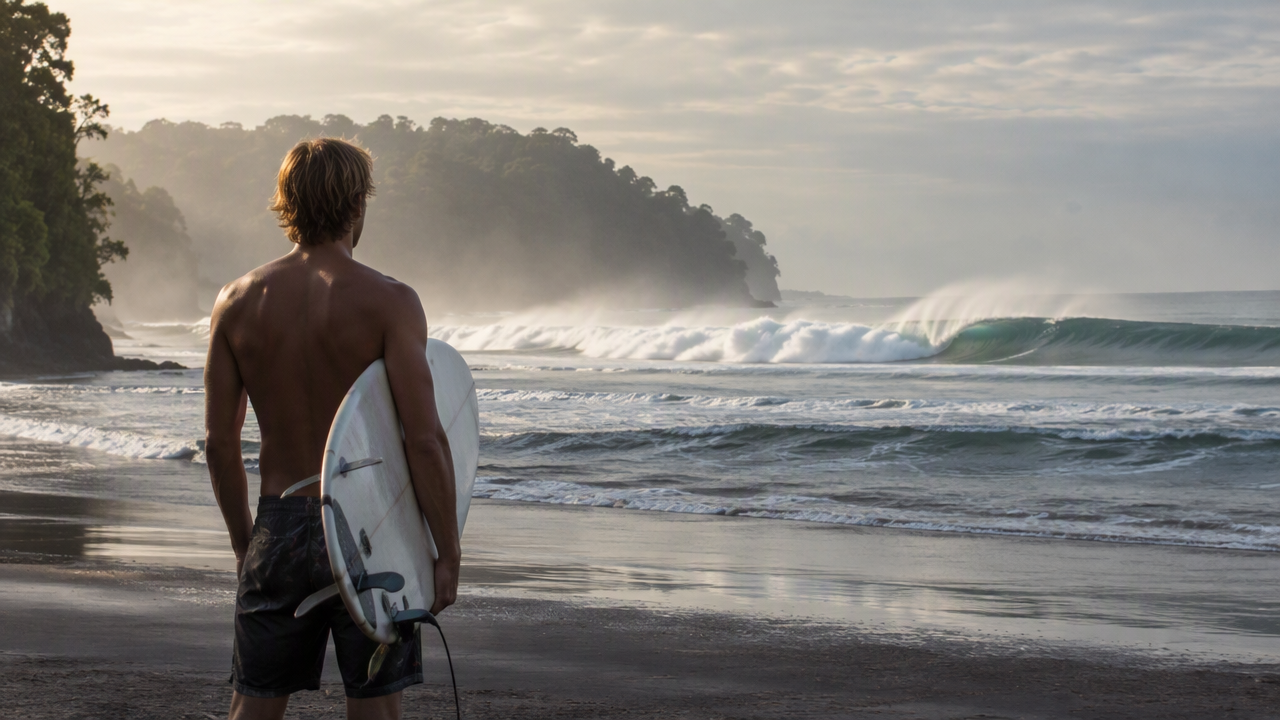
Watch Before You Paddle Out
Spend five minutes watching. Look for:
- Where waves break first (the peak). That's where surfers sit.
- Sets. Waves often arrive in groups, with calmer periods between.
- Channels. Darker, calmer water where waves don't break is often a current flowing out — useful for experienced surfers to paddle out, but dangerous for beginners. See Surf Safety.
Good Waves vs. Bad Waves
- A peak with a shoulder breaks gradually from one point, giving a ride along its face.
- A closeout breaks all at once. It's fine in the whitewater, but there's no open face to ride.
- Choppy, wind-blown waves are harder to ride than smooth, clean ones.
How Wind Changes Waves
Offshore wind (land to sea) grooms waves and holds them up. Onshore wind (sea to land) makes them crumbly and messy. Many surfers prefer early mornings when winds are lighter.
How Tide Changes Waves
Beach breaks change shape with the tide. Read Understanding Surf Tides.
Practise
Next time you're on the beach, pick a wave early and predict where it will break. It's the best free training there is. Terms explained in the glossary.
Ready to put this into practice? Book a surf lesson in Jaco — beginner lessons, private lessons ($140) or group lessons ($75), all taught by female surf instructors.
Group Surf Lesson — $75 per person · Private Surf Lesson — $140 per person
Female instructors · Snacks & drinks included · 20% deposit to reserve
Ready to Surf Jaco? Book Your Lesson