Surf Safety in Jaco, Costa Rica
Surf safety in Jaco, Costa Rica: rip currents, falling safely, leashes, swimming ability, kids, sun, storms and why lesson locations and times sometimes change.
Surfing is fun and, with sensible habits, can be done responsibly. No activity in the ocean is risk-free, so this guide explains how to reduce risk around Jacó and how our lessons approach safety.
Ocean Awareness
Spend a few minutes watching before you enter: where waves break, where the water looks calmer and darker (often a current), how far apart the sets are, and where other surfers and swimmers are. See how to read waves.
Rip Currents
A rip current is a channel of water flowing back out to sea. They are common on open beach breaks like Jaco Beach.
- Signs: a darker or calmer gap between breaking waves, foam or debris moving seaward, choppy water heading out.
- If caught: stay calm, keep hold of your board (it floats), and paddle parallel to the shore until you are out of the current, then return. Don't fight directly against it.
Surfboard Safety
Boards are heavy and can hurt. Keep your board beside you, never between you and a wave, and never throw it away when a wave approaches — someone may be behind you.
Surf Leashes
The leash attaches the board to your back ankle so it doesn't wash away. It also means the board can spring back towards you, so surface with your arms over your head.
Protecting Your Head When You Fall
Fall flat and away from the board, feet or back first. Never dive head-first — the water may be shallow. Come up with your arms covering your head.
Surf Etiquette
The surfer closest to the peak has priority; don't drop in on others; paddle around the breaking area. More in surfing etiquette.
Swimming Ability
You should be comfortable in the ocean. If you're unsure about your swimming, tell us before booking so we can talk it through.
Children and Surfing
Children need close supervision and conditions that match their confidence. Tell us each child's age and swimming ability when booking — see kids surf lessons.
Sun Protection and Hydration
The tropical sun is strong even when it's cloudy. Apply reef-safe sunscreen before your lesson, wear a rash guard and drink water before and after surfing.
Weather, Lightning and Storms
Rain alone doesn't stop surfing. Thunderstorms do: if there's lightning nearby, everyone leaves the water. Afternoon storms are more common in the green season, which is one reason morning lessons are popular — see the surfing calendar.
Why Surf Locations Sometimes Change
The same beach can be gentle one day and powerful the next. We choose the location that suits the day's swell, tide, wind and your ability — sometimes that means somewhere other than where you expected. See surf locations near Jaco.
Why Lesson Times Sometimes Change
Tide and wind change through the day. If a different time will give safer, more suitable conditions, we may suggest moving your lesson.
Why Instructors Evaluate Conditions First
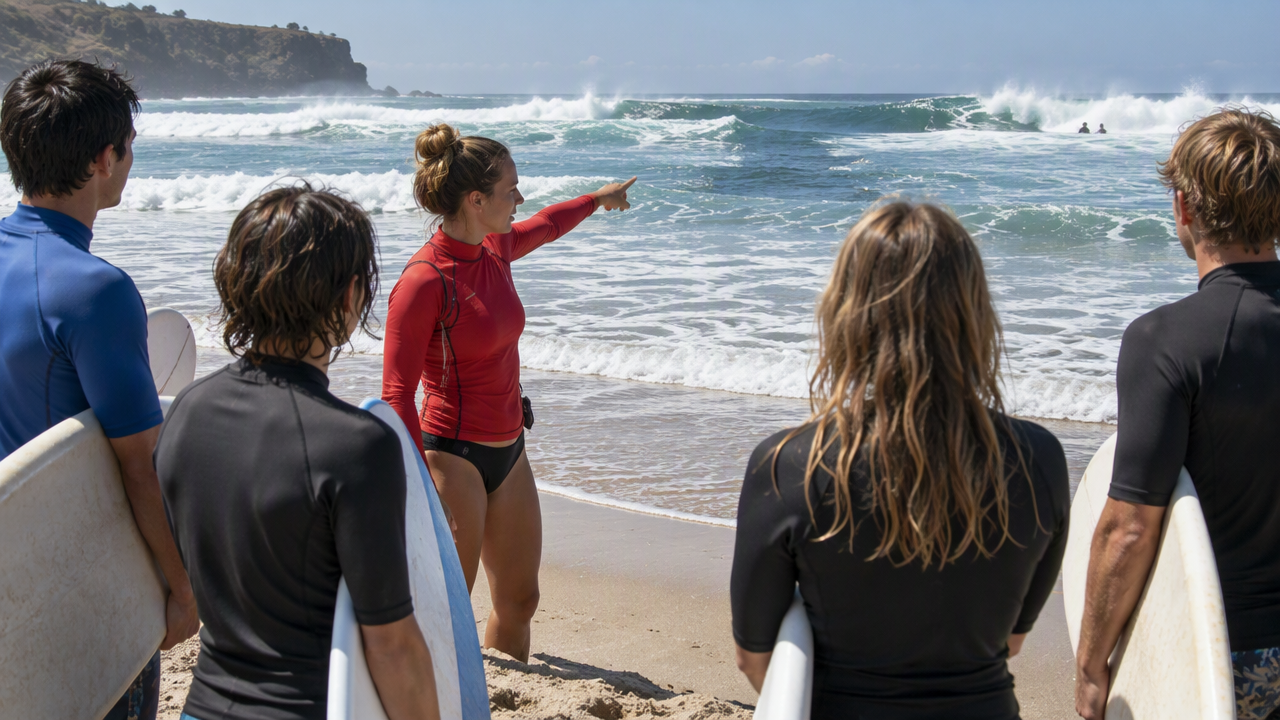
Before anyone enters the water, your instructor checks the waves, currents, crowd and weather. If conditions aren't suitable, we'll choose another spot, another time, or contact you to reschedule.
Printable Checklist
Download the beginner surf safety checklist.
Ready when you are: book a Jaco surf lesson or ask about today's lesson options on WhatsApp.
Group Surf Lesson — $75 per person · Private Surf Lesson — $140 per person
Female instructors · Snacks & drinks included · 20% deposit to reserve
Ready to Surf Jaco? Book Your Lesson