Surfing 101: A Beginner's Introduction
Surfing 101: the equipment, the parts of a wave, how a surf session works and the first skills every beginner learns, explained simply.
New to surfing? This page explains the basics so your first lesson makes sense from minute one.
The Equipment
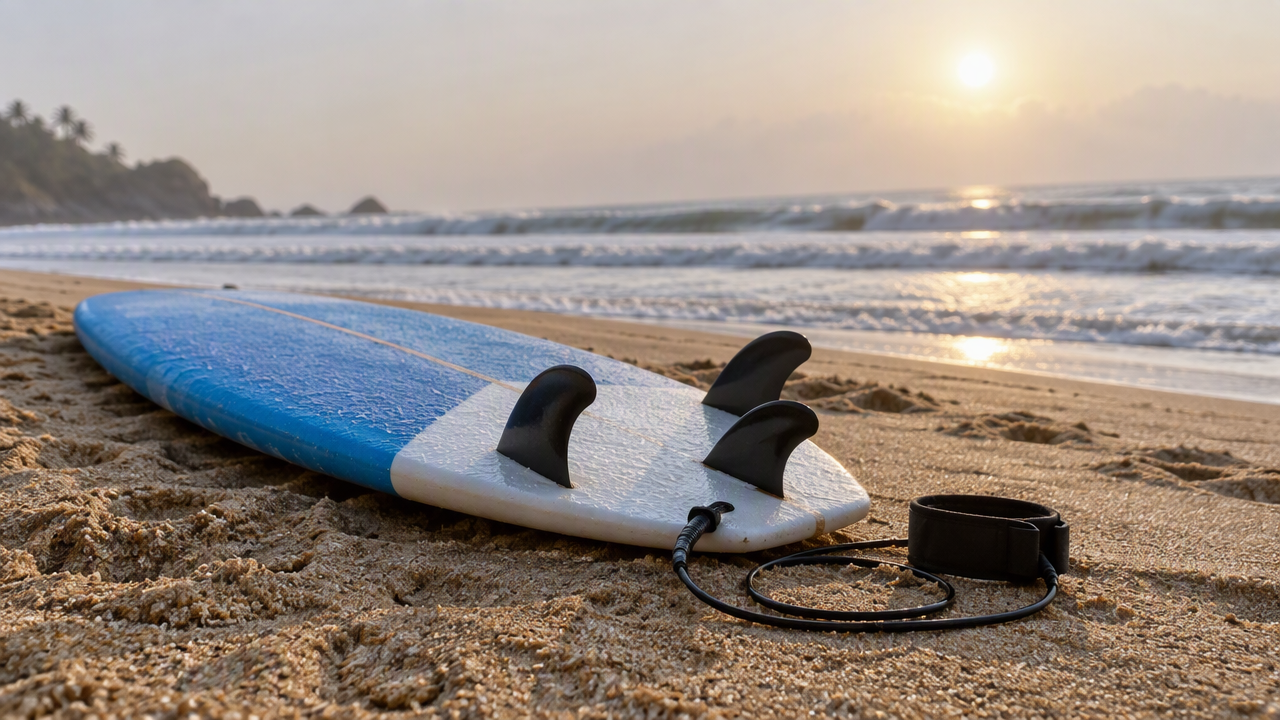
- Surfboard. Beginners use long, wide, thick soft-top boards because they float well and are stable. See choosing a beginner surfboard.
- Leash. A cord attaching the board to your back ankle so it doesn't wash away.
- Rash guard or swimsuit. In Costa Rica's warm water, that's all you usually need. See what to wear.
The Parts of a Wave
- Peak — the highest point, where the wave first breaks.
- Shoulder — the unbroken part sloping away from the peak.
- Whitewater — foam left after the wave breaks. This is where beginners start.
- Closeout — a wave that breaks all at once along its length.
More in the surfing glossary.
How a Session Works
- Watch the ocean for a few minutes: where waves break, where currents run, where other surfers are.
- Paddle out (or walk out, in shallow whitewater).
- Turn toward the beach, paddle as a wave arrives, and stand up once it carries you.
- Ride, step off safely, and walk or paddle back out.
The Three First Skills
Safety First
Before anything else, read Surf Safety. Conditions change daily, which is why lessons around Jacó move to the spot that suits the day.
Ready to put this into practice? Book a surf lesson in Jaco — beginner lessons, private lessons ($140) or group lessons ($75), all taught by female surf instructors.
Group Surf Lesson — $75 per person · Private Surf Lesson — $140 per person
Female instructors · Snacks & drinks included · 20% deposit to reserve
Ready to Surf Jaco? Book Your Lesson