Understanding Swell
What swell is, how swell height, period and direction affect waves, and how to read a surf forecast for Jaco and the Central Pacific.
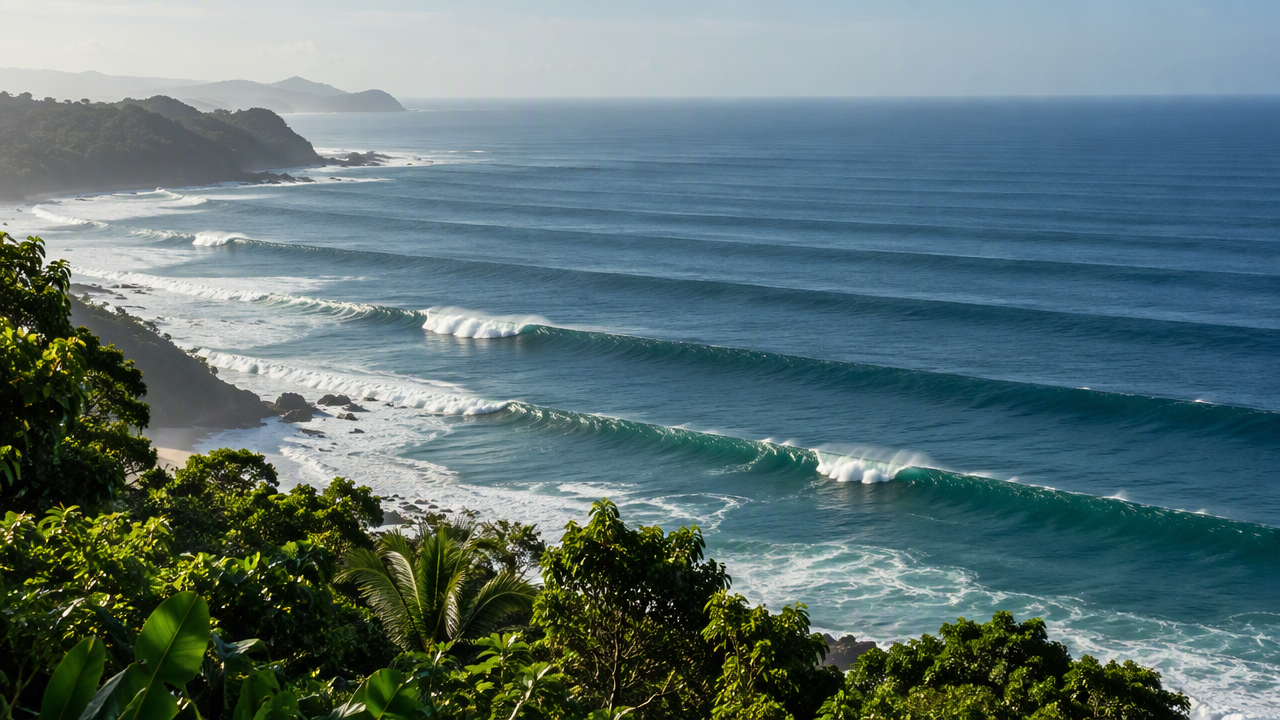
Waves at the beach usually begin as swell: energy created by wind storms far out at sea, travelling across the ocean.
The Three Numbers in a Forecast
- Height — how big the swell is offshore. Beach waves can be smaller or larger.
- Period — seconds between waves. Longer periods (roughly 12+ seconds) carry more energy and usually mean more powerful surf; short periods often mean weaker, choppier waves.
- Direction — where the swell comes from. Each beach faces a different way, so direction decides which spots receive it.
Swell vs. Wind Waves
Local wind creates short-period "wind swell" that's often messy. Distant storms create cleaner "ground swell". Many of the Pacific swells reaching Costa Rica during the green season come from storms in the Southern Hemisphere.
What It Means for Beginners
Big or long-period swell can make a normally gentle beach powerful. On those days a sheltered spot is often better for learning — another reason lesson locations move around Jacó.
Read It Live
See swell height, period and direction for Jacó on our live surf report, and learn seasonal patterns in the surfing calendar.
Related: Understanding Surf Tides · Glossary
Ready to put this into practice? Book a surf lesson in Jaco — beginner lessons, private lessons ($140) or group lessons ($75), all taught by female surf instructors.
Group Surf Lesson — $75 per person · Private Surf Lesson — $140 per person
Female instructors · Snacks & drinks included · 20% deposit to reserve
Ready to Surf Jaco? Book Your Lesson